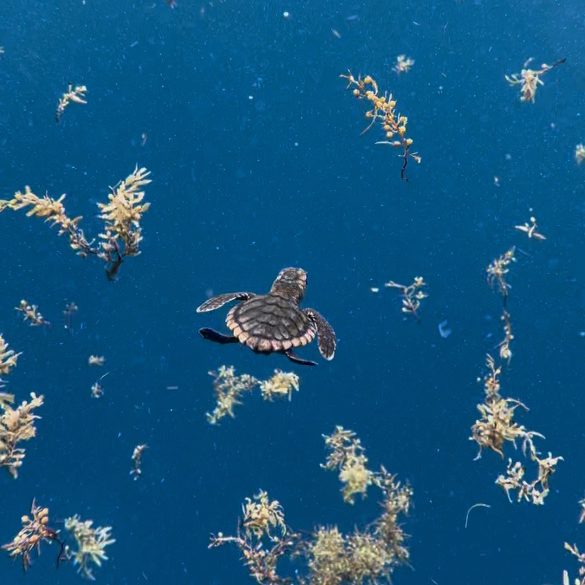
Sea turtles have been navigating the oceans for 110 million years, but due to the rise of plastic pollution, particularly microplastics, we have now begun to see the effects on sea turtle early development. These tiny plastic fragments, less than 5mm in size, are now being found in post-hatchling sea turtles, raising concerns about their impact on early development and survival.
How Do Post-Hatchlings Encounter Microplastics?
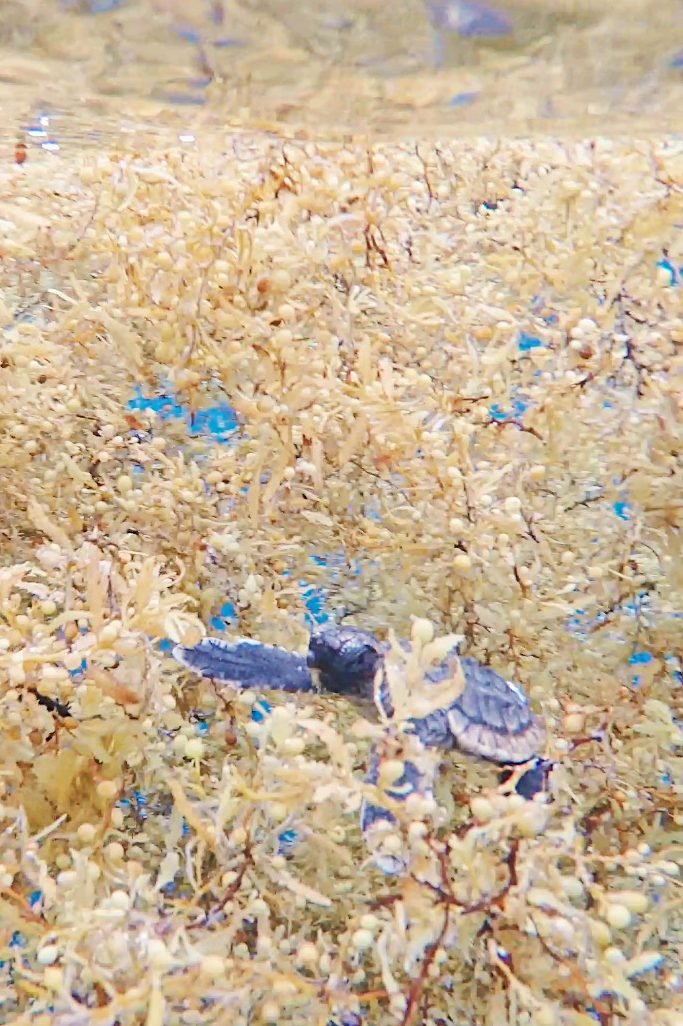
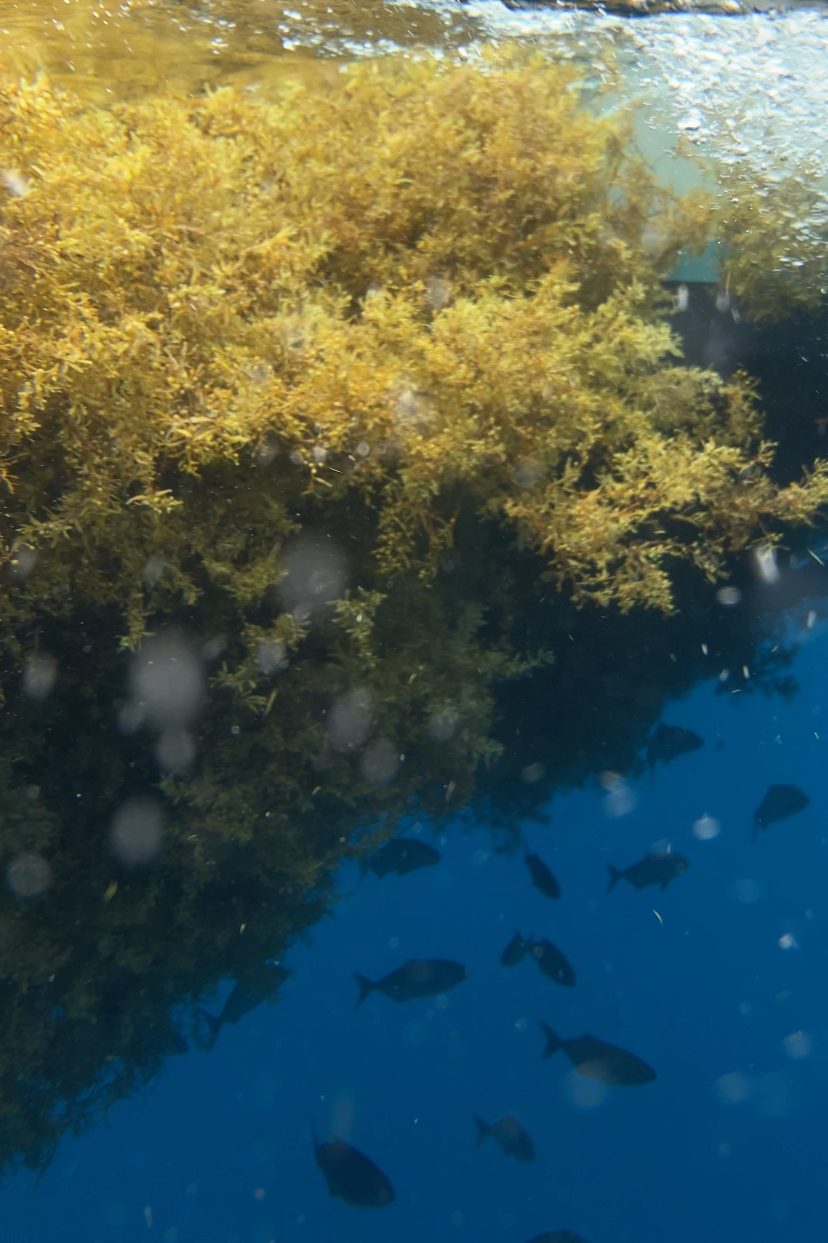
Sargassum, a genus of brown macroalgae, serves as both a habitat and a food source for various species, including juvenile sea turtles, seabirds, crabs, and fish. Floating on the ocean’s surface, it drifts with currents in the Gulf of Mexico, the Atlantic Ocean, and the Caribbean.
Unfortunately, Sargassum has become a consolidation point for plastic pollution. Ocean currents concentrate microplastics in these areas, posing a threat to marine life. Sea turtle hatchlings, which seek refuge in Sargassum during their first 1–3 years (Mansfield et al. 2014), instinctively consume small floating particles, unintentionally ingesting plastic alongside their natural diet. This is particularly concerning as plastic can mimic the appearance and behavior of natural prey.
The Impact on Post-Hatchling Sea Turtles
Post-hatchlings have developing digestive systems, making them vulnerable to the harmful effects of plastic ingestion. Ingested plastic can obstruct the gut, reducing nutrient absorption and leading to malnutrition. Plastics carry harmful chemicals that can leach into a turtle’s body, potentially disrupting growth and immune function. Ingested plastic can trap gas in the digestive system, making it difficult for turtles to dive properly, putting them at greater risk of predation.
What Research is Revealing
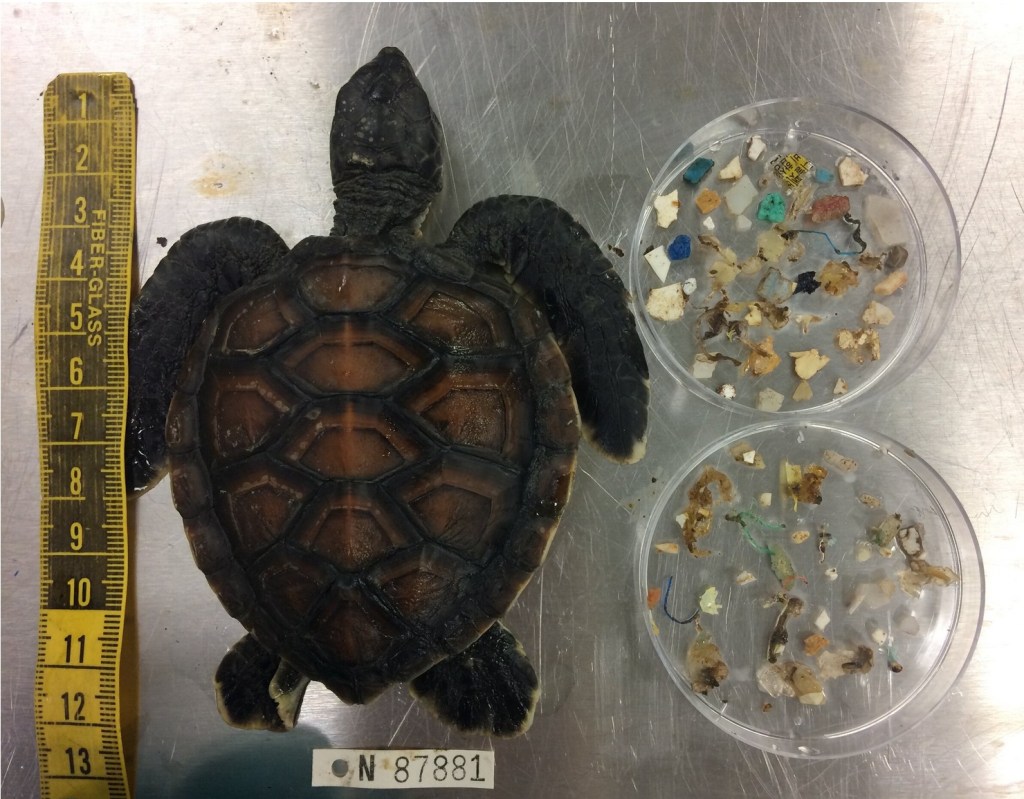
Recent studies have found that a significant percentage of post-hatchlings contain microplastics in their digestive tracts. Necropsies on stranded post-hatchling loggerhead (Caretta caretta) sea turtles in Northwest Florida have found plastic fragments (0.36–12.39 mm in length) in 92.86% (39/42) of examined turtles, with GI burdens ranging from 0 to 287 fragments (up to 0.33 g). Post-hatchlings weighed 16.0–47.59 g, with plastic comprising up to 1.23% of body weight (Eastmen et al. 2020). While the full extent of long-term health effects is still being studied, the presence of plastic in such young turtles suggests that human-made pollution is interfering with critical early life stages.
What Can Be Done?
While global efforts to reduce plastic pollution are ongoing, more immediate actions can help protect post-hatchlings:
First and foremost—REDUCE your consumption.
You don’t need so much stuff. Seriously. The easiest way to stop plastic from reaching the ocean is to not buy it in the first place. Every product you purchase has a life cycle, from manufacturing to disposal, and most plastic never truly goes away. Be intentional with what you consume.
Ditch Single-Use Plastics.
I know this one gets heard over and over however, single-use plastic has a huge impact. Think of single-use plastics as a convenience tax on the environment. Plastic bags, straws, takeout containers, and unnecessary packaging all contribute to the millions of tons of plastic entering the ocean each year. Opt for reusable bags, water bottles, utensils, and food containers.
Support Conservation Efforts.
Sea turtle rehab centers aren’t just cute sanctuaries, they’re research hubs. These organizations collect critical data on plastic ingestion, helping to influence environmental policies and legislation. Whether you donate, volunteer, or simply spread awareness, supporting these efforts directly helps protect vulnerable species.
Join a Beach Cleanup.
Plastic waste left on beaches will eventually break down into microplastics, infiltrating marine food chains. Participating in coastal cleanups, or even just picking up trash when you visit the beach, prevents this pollution at the source.
Hot Take Corner:

Don’t go on cruise ships. They’re floating environmental disasters. These massive vessels dump waste, disrupt marine ecosystems, and contribute to plastic pollution
Cook at home more. Eating out constantly means endless plastic packaging, takeout containers, and disposable utensils. Cooking at home reduces waste and saves you money.
Swap your toothpaste tubes for tooth powder or tablets. Toothpaste tubes are nearly impossible to recycle and contribute to plastic waste. Tooth powders and tablets come in glass jars or compostable packaging.
Before buying new, check thrift stores or Facebook Marketplace. The planet doesn’t need more mass-produced junk. Shopping secondhand reduces demand for new plastic-heavy products and keeps perfectly good items out of landfills.
Stop buying cheap, overpriced plastic clothing—read the labels! Fast fashion is one of the biggest microplastic culprits. Synthetic fabrics (like polyester and nylon) shed plastic fibers into waterways every time you do laundry. Choose natural fibers like cotton, hemp, wool, or linen.
Delete your Amazon Prime membership. You don’t need to impulse-buy 10 plastic gadgets overnight. Amazon’s packaging waste is astronomical, and supporting local businesses or sustainable brands is a better way to shop. Jeff Bezos will survive without your Prime membership, the turtles might not.
Every small action compounds. You don’t have to be perfect, but making conscious choices, starting with reducing plastic consumption, can help protect post-hatchlings and marine ecosystems as a whole.
The presence of microplastics in post-hatchling sea turtles is a sobering reminder of our impact on marine life. By taking action now, we can help ensure that future generations of sea turtles have a chance to thrive in a cleaner ocean.
Sources
Eastman CB, Farrell JA, Whitmore L, Rollinson Ramia DR, Thomas RS, Prine J, Eastman SF, Osborne TZ, Martindale MQ and Duffy DJ (2020) Plastic Ingestion in Post-hatchling Sea Turtles: Assessing a Major Threat in Florida Near Shore Waters. Front. Mar. Sci. 7:693. [doi: 10.3389/fmars.2020.00693].
Mansfield KL., Wyneken J, Porter WP. and Luo J (2014) First Satellite Tracks of Neonate Sea Turtles Redefine the ‘lost years’ Oceanic Niche. Proc. R. Soc. B.28120133039 [http://doi.org/10.1098/rspb.2013.3039].
Photographs
From hatchling releases here in the Gulf of Mexico

 Moms Beneath the Blue
Leave a comment