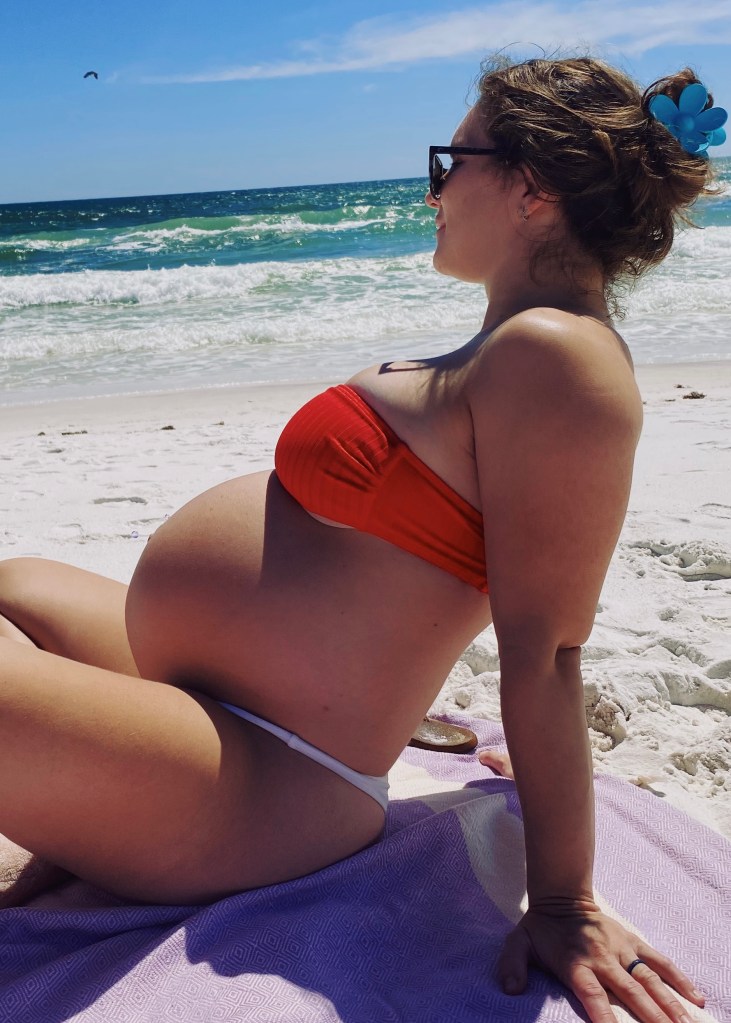
This week, Women in Ocean Science sparked an open discussion on Instagram about maternity in marine science. As someone currently navigating this, I found it incredibly relevant.
A recent study in the U.S. found that about 43% of mothers left their full-time STEM careers after having children, and 71% of those who switched to a different field cited family-related reasons for their decision. Additionally, many women choose to delay or forgo having children to focus on their careers. Further, mothers in academia are less likely to achieve tenure compared to fathers or childless colleagues and frequently face a salary penalty after becoming parents. (Di Bartolo and Torres 2024).
Yet the challenges we face often go unseen such as internal fears, self-doubt, and the emotional weight of leaving our babies. Beyond that, many lab environments contain hazardous materials that can pose risks to developing fetuses, requiring expectant mothers to modify their work or step away from certain tasks altogether. Further, pregnancy can come with unpredictable health complications that impact a scientist’s ability to work effectively. On top of these physical challenges, women in STEM frequently face intrusive or even sexist remarks from colleagues, adding another layer of difficulty.
I’ve experienced many of these challenges first hand and I still do. Fortunately, I don’t feel completely set back in my career as of now, as I’ve laid out plans to navigate my future employment (more on that later). However, my pregnancy experiences occurred during graduate school, which tends to be more accommodating than traditional employment. So, keep that in mind as you read on. Additionally, there are some other resources at the bottom if you are looking for more information.
Pregnancy in Graduate School
During my twin pregnancy, I was as a graduate student taking two classes and working as a teaching assistant (TA) three days a week. In my Contemporary Lab Skills course, there were substances I was not sure were safe or knew it could potentially be harmful. I always wore gloves, and my peers were often understanding and handled those steps for me.
As a TA for Human Anatomy and Physiology II, I also faced a more direct hazard, formaldehyde-soaked specimens used for dissections. Formaldehyde is known to pose developmental risks to fetuses, so I had to be cautious. Thankfully, the instructor assisted me, and students were diligent about cleaning up.
My biggest takeaway? Speak up and advocate for yourself. Do your research, ask for accommodations, and prioritize your safety. I was lucky to be surrounded by supportive faculty, but I know this isn’t the case for everyone. Now, as I transition into a career, I wonder how often women really do experience job loss due to pregnancy.
The Reality of a High-Risk Pregnancy
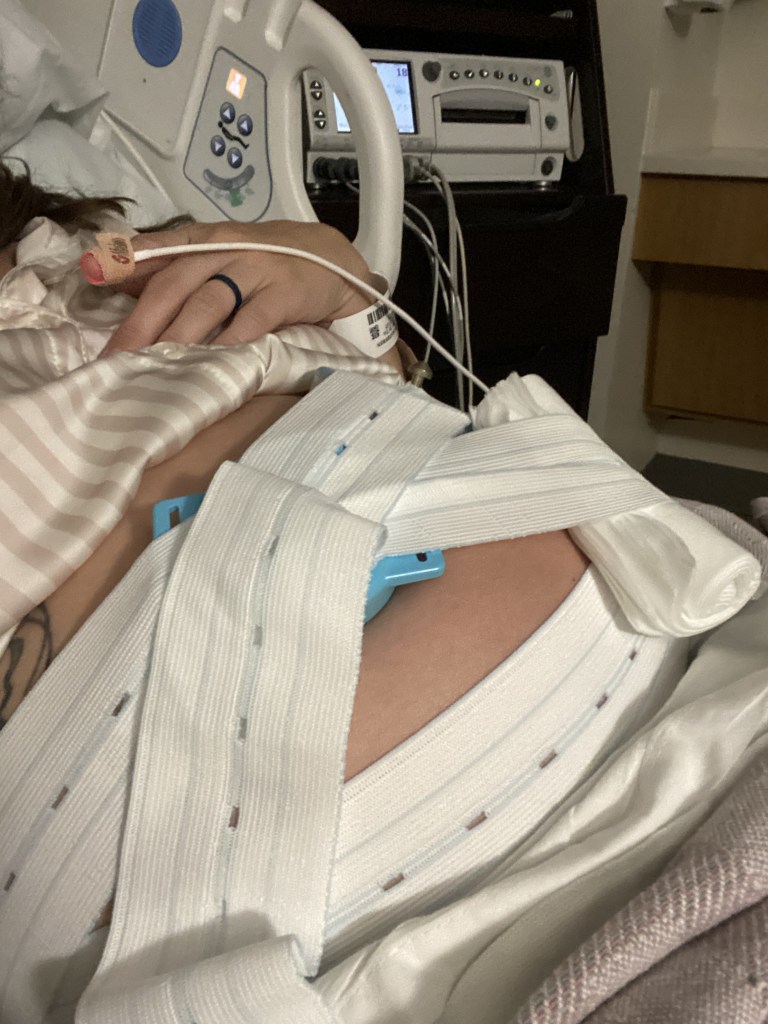
No pregnancy is the same and there can be unexpected health challenges. Carrying twins put me in the high-risk category and the addition of having high blood pressure. At 14 weeks, we were told the babies would likely arrive between 32-34 weeks, much earlier than my June 21st due date. I needed weekly ultrasounds, which later increased to twice a week as complications developed.
At 27 weeks, I was hospitalized due to pregnancy complications. Despite being confined to a hospital bed, I kept up with my responsibilities, I graded assignments, took an exam, and even wrote a protocol. However, I was exempt from a recorded presentation, and once I was discharged, I wasn’t required to return in person while on bed rest. My twins ultimately arrived at 33 weeks.
I feel fortunate that my university and professors were so accommodating. But I know that for many women, the reality is different. Not all workplaces are as flexible, and many mothers have to make impossible choices between their health, their pregnancy, and their careers.
Sexism in Science
Personally, I didn’t experience inappropriate remarks during my pregnancy, but that doesn’t mean the problem doesn’t exist. One well-known case at my university involved a respected professor who was pregnant. A male colleague reportedly commented that she wouldn’t go far in research and that there was no place for women like her in the field. From what I understand, he later stepped down from his position at the time.
This mindset is still pervasive in STEM, even if it’s not always vocalized. The assumption that motherhood hinders scientific contribution is outdated and damaging. Women in marine science, and all scientific fields, shouldn’t have to choose between their careers and their families. We can have both.
Motherhood Can Lead to Exhaustion
Motherhood is an all-consuming role, that doesn’t come with scheduled breaks or time off, not that I think it should. The exhaustion isn’t just physical, it’s mental and emotional too. There’s always something that needs to be done and the train never stops.
On top of my everyday responsibilities, I continue to work on publishing my research, which requires focus, patience, and persistence. However, carving out uninterrupted time to think, write, and analyze feels almost impossible when every moment is spoken for. My passion for marine biology and career goals haven’t disappeared just because I became a mother, but balancing both worlds is overwhelming. There are times when I feel like I’m barely keeping my head above water, juggling motherhood, academic work, and the loneliness that comes with having a spouse who is away for months at a time.
Despite the exhaustion, I remind myself that this phase of life is temporary. My daughters won’t be this little forever. Still, that doesn’t make it easier at the moment when deadlines are looming, and self-care feels like a luxury I can’t afford.
I know I’m not alone in this. So many mothers struggle with the same exhaustion, the same desire to reclaim parts of themselves outside of being a caregiver. It’s okay to admit that this is hard. It’s okay to say that motherhood is exhausting. And it’s okay to need help, support, and moments of rest. While being a mother is a beautiful journey, it is also one of the most demanding roles a person can take on.
Moving Forward
As I continue my journey, I actively explore ways to balance my career and motherhood. I know I don’t want a traditional 9-to-5. My ideal setup? Remote work with the flexibility to participate in field expeditions and conferences a couple of times a year. But that’s easier said than done.
Affordable and trustworthy childcare is a significant hurdle many face, especially with daycare rates increasing while quality service seems to be declining. My options are limited without family nearby and with the average pay rate in the marine science field. D Daycare on base is more affordable but inconvenient for both my husband and me.. I’m looking for an au pair, not thrilled about the idea of someone living in my home, but I’d rather my kids be at home than in daycare. The cost is cheaper than daycare but slightly more expensive than base daycare.
These are the decisions and challenges women face in marine science. Decisions that affect their professional aspirations and maternal responsibilities. There’s no one-size-fits-all answer, but we need to keep having these conversations. Maternity in science shouldn’t be a taboo subject or a career death sentence. We can be mothers and successful scientists, but the system needs to evolve to support that.
Would love to hear from other moms in science—how have you navigated maternity in your field?

Sources to check out!!
https://www.mothersinscience.com/
https://www.asbmb.org/asbmb-today/careers/010423/stem-parents-call-for-culture-and-policy-change
Reference
Belinda Di Bartolo, Isabel L Torres, Motherhood penalty and the gender gap in STEM and medicine, European Heart Journal, Volume 45, Issue 31, 14 August 2024, Pages 2800–2802, https://doi.org/10.1093/eurheartj/ehae262

 Moms Beneath the Blue
Leave a comment